Why Concrete Platform Weighbridges Outperform Steel in Every Way That Matters
Steel was once the default for weighbridge platforms. But steel bends, rattles, rusts, and fails — often within 15 years. Rite-Way has been championing the transition to high-precision concrete platforms in India for over 20 years, bringing global engineering excellence to local industries.
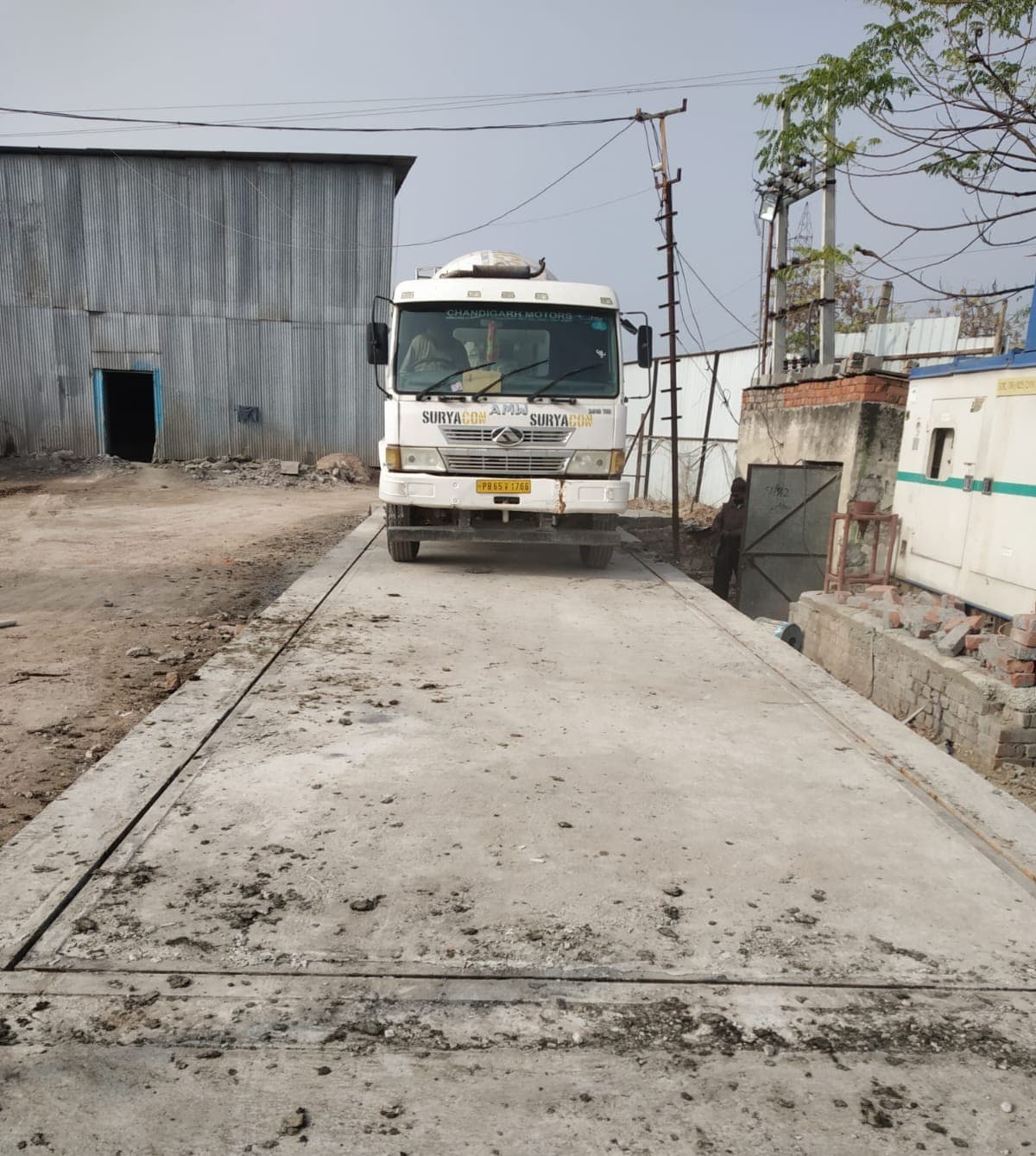
Every Dimension Where Concrete Wins
This is not a preference — it is physics, economics, and two decades of real-world installation data across India.
Structural Accuracy
Rigid monolithic RCC structure distributes load equally across all 6 load cells. No flex, no lateral pull — just pure accuracy.
Steel bends and rattles under heavy loads, causing lateral pull on load cells and introducing cumulative weighing errors.
Structural Strength
Heavy mass eliminates cantilever and inverse force issues entirely. The platform is always heavier than the gross vehicle load.
Steel deck is lighter than the gross vehicle load, causing twisting forces and structural stress that worsen with age.
Vehicle Grip & Safety
Natural rough concrete surface arrests vehicle movement without any added material. Zero slip, even when wet.
Anti-skid diamond strips break, peel, and need periodic re-welding — an ongoing maintenance cost and safety hazard.
Lightning & Static Protection
Concrete is naturally immune to electrostatic charge and lightning strikes. Instrumentation stays safe in all weather.
Steel platforms act as conductors during storms, channelling lightning and electrostatic charge directly into instrumentation.
Operational Lifespan
Engineered to deliver decades of reliable service without structural degradation. A long-term infrastructure investment.
Steel weighbridges show significant bending, corrosion, and structural fatigue within 10–15 years, requiring full replacement.
Total Cost of Ownership
Concrete material costs 40% less than equivalent steel fabrication. Cast on-site — zero transport charges for the platform.
Steel fabricated off-site requires heavy transport to location. Higher material cost, plus ongoing maintenance and repainting.
Maintenance Requirements
Zero rust. Zero maintenance. No nuts to tighten, no painting, no anti-corrosion treatment — ever.
Requires periodic bolt tightening, rust treatment, repainting, and anti-skid repair. Ongoing cost for the life of the asset.
Capacity Enhancement
Can be upgraded to 100T+ capacity by simply swapping to heavy-duty load cells. No structural changes or extra cost.
Cannot be easily upgraded. Higher capacity requires full structural re-fabrication or complete replacement.
Concrete vs Steel — The Full Picture
Every attribute that affects your total cost of ownership, accuracy, and operational reliability — compared directly.